

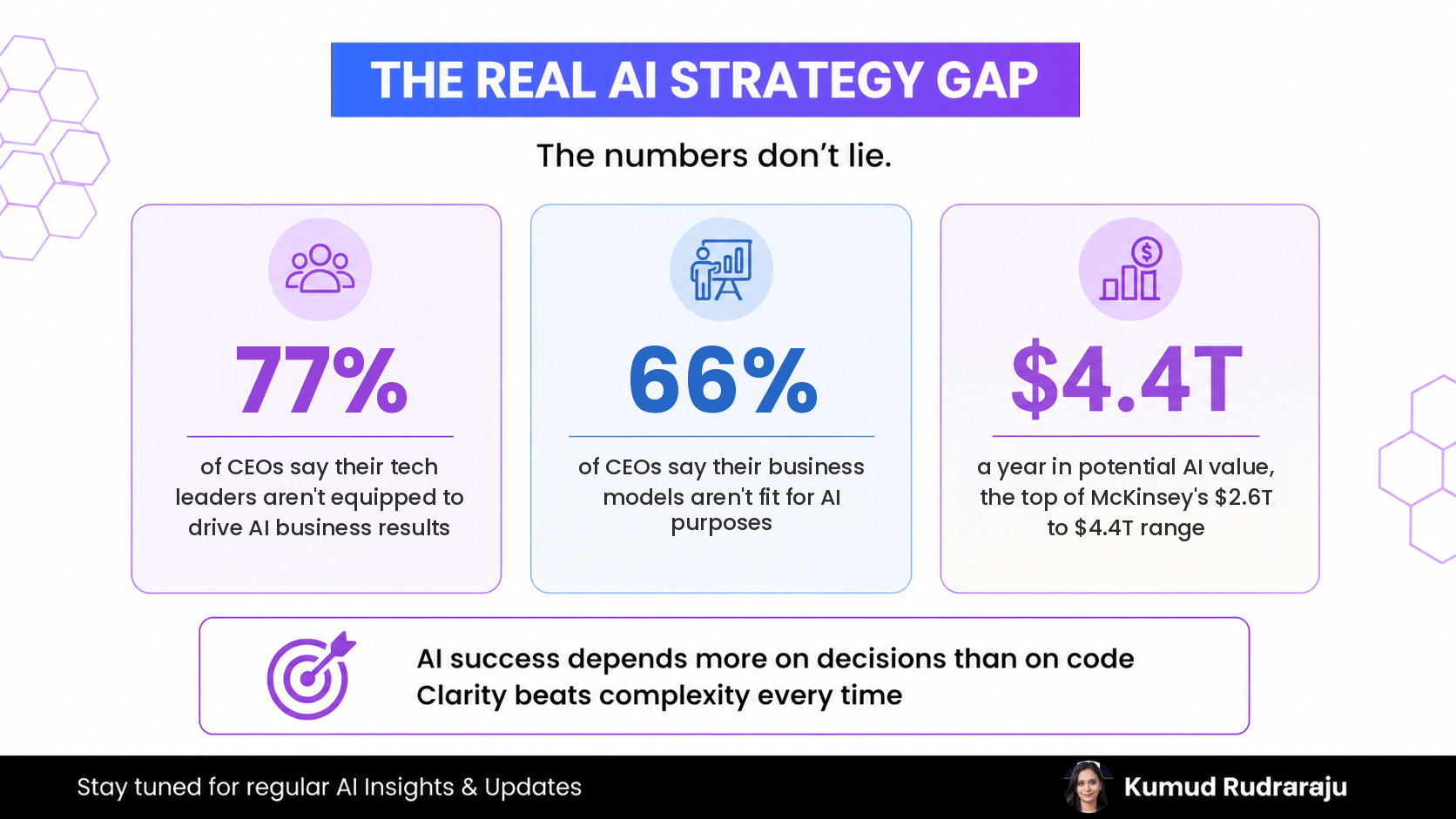
You don’t need to understand how AI works.
You need to understand how to lead with it, and those are very different skills.
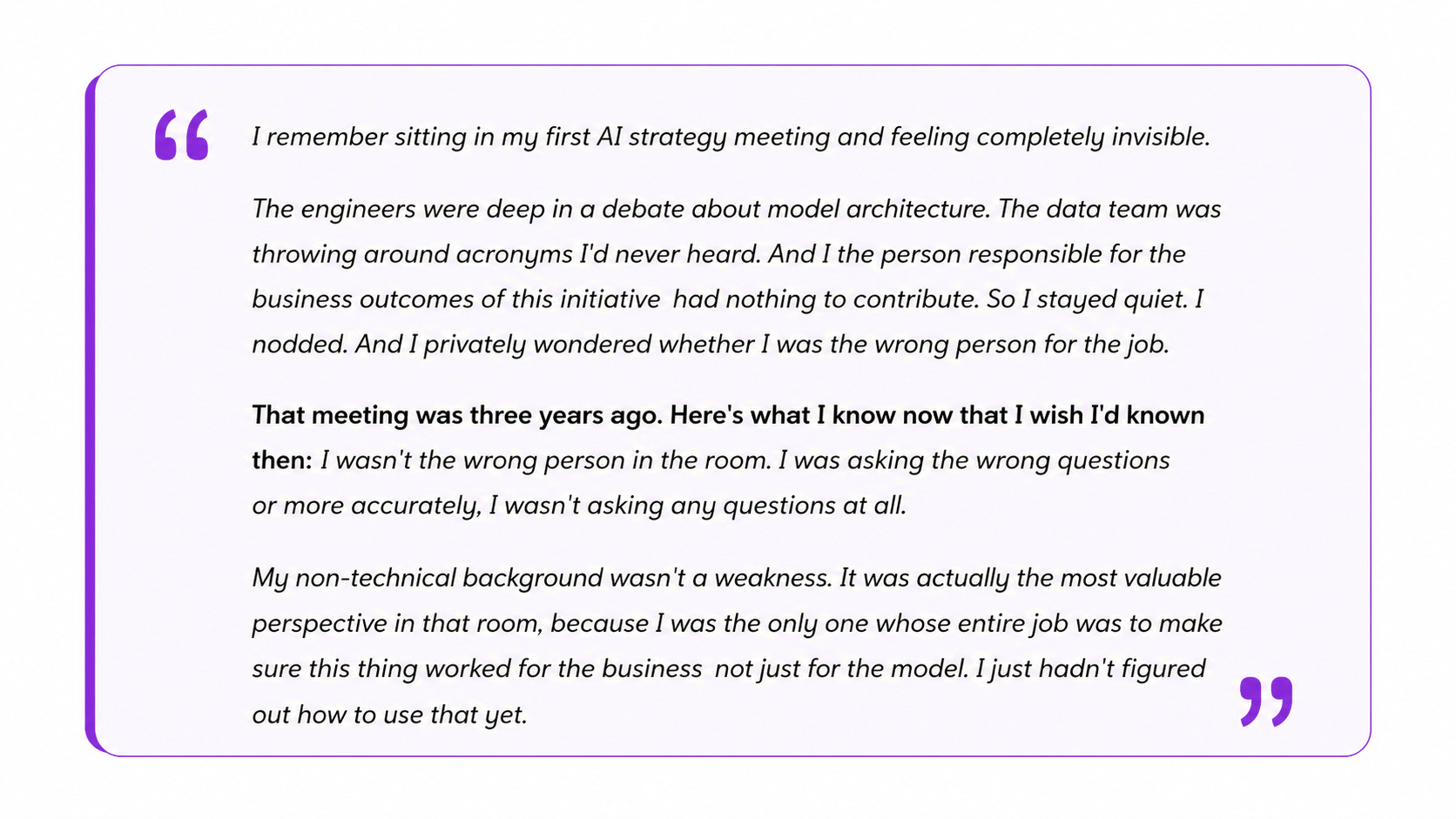
This newsletter is what I would have wanted to read before that meeting.
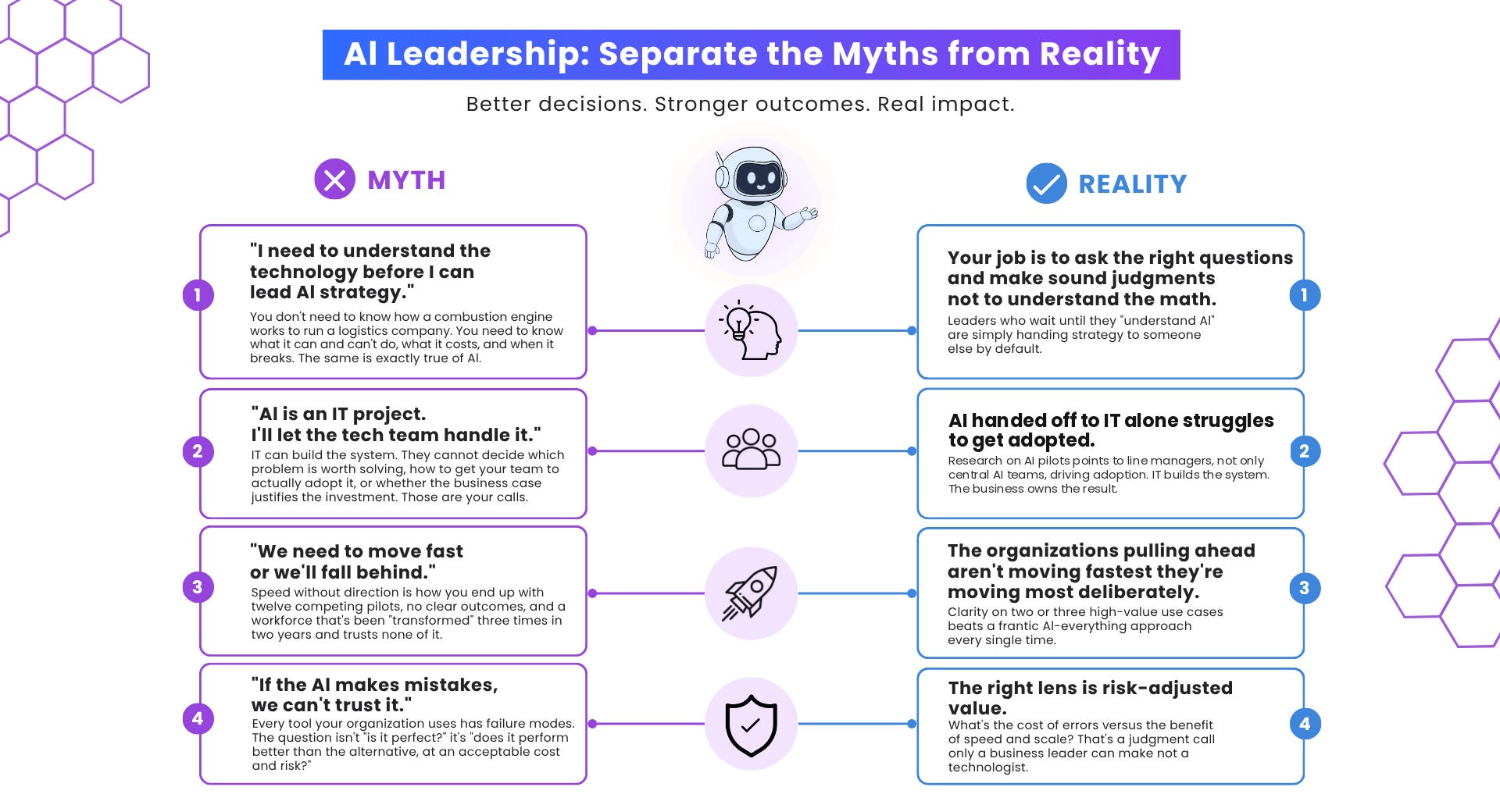
There’s a persistent myth in most organizations: that AI strategy belongs to the CTO, the data team, or whoever understands the technology.
Everyone else waits for the briefing.
This is exactly backwards. The most important AI decisions (what to prioritize, where to invest, how to bring your people along, when to stop) are not technical decisions. They’re leadership decisions. And they belong to you.
Here’s the practical guide I wish had existed when I was starting out.
4 myths that keep non-technical leaders on the sidelines
6 principles for leading AI without being technical
Own the problem definition, always. The single most valuable thing you can do in any AI initiative is insist on a crisp, shared definition of the problem before any solution is discussed. “We want to use AI for customer service” is not a problem. “Reduce first-response time from 4 hours to 30 minutes for tier-1 queries without increasing headcount” is. The difference determines everything that follows.
Translate ambition into questions, not mandates. “We need AI in this department by Q3” creates activity but not progress. Better: “What’s the single biggest time sink in this team’s week, and could AI meaningfully reduce it?” Leaders who ask sharp questions get useful answers. Leaders who issue mandates get demos.
Protect your people’s trust in the process. The fastest way to kill adoption is to surprise people with AI. Involve teams early. Be transparent about what the system does and doesn’t do. Give people genuine agency, including the ability to flag when something feels wrong. Trust, once broken in an AI rollout, is very hard to rebuild.
Make the “stop” decision as deliberate as the “go.” Most organizations are good at starting AI pilots. Almost none are good at stopping them. Define explicit criteria upfront: if this doesn’t show X result in Y weeks, we stop or pivot. Leaders who can say “this isn’t working, we’re stopping” are more credible, not less.
Measure what the business cares about, not what the technology produces. Your AI vendor will show you impressive accuracy numbers. Your board cares about revenue, cost, and customer satisfaction. Make sure someone in every initiative is responsible for connecting those two worlds, and that it’s not only the tech team.
Build AI literacy at the team level, not just leadership level. The best ROI on AI capability-building isn’t a leadership offsite. It’s helping the people closest to the work understand enough to identify opportunities and contribute to rollout decisions. That’s where real adoption happens, and it compounds.
8 questions every leader should be able to answer
If you can answer these for any AI initiative in your organization, you’re ahead of most non-technical leaders, and many technical ones. I keep these on a card. They’ve never let me down.
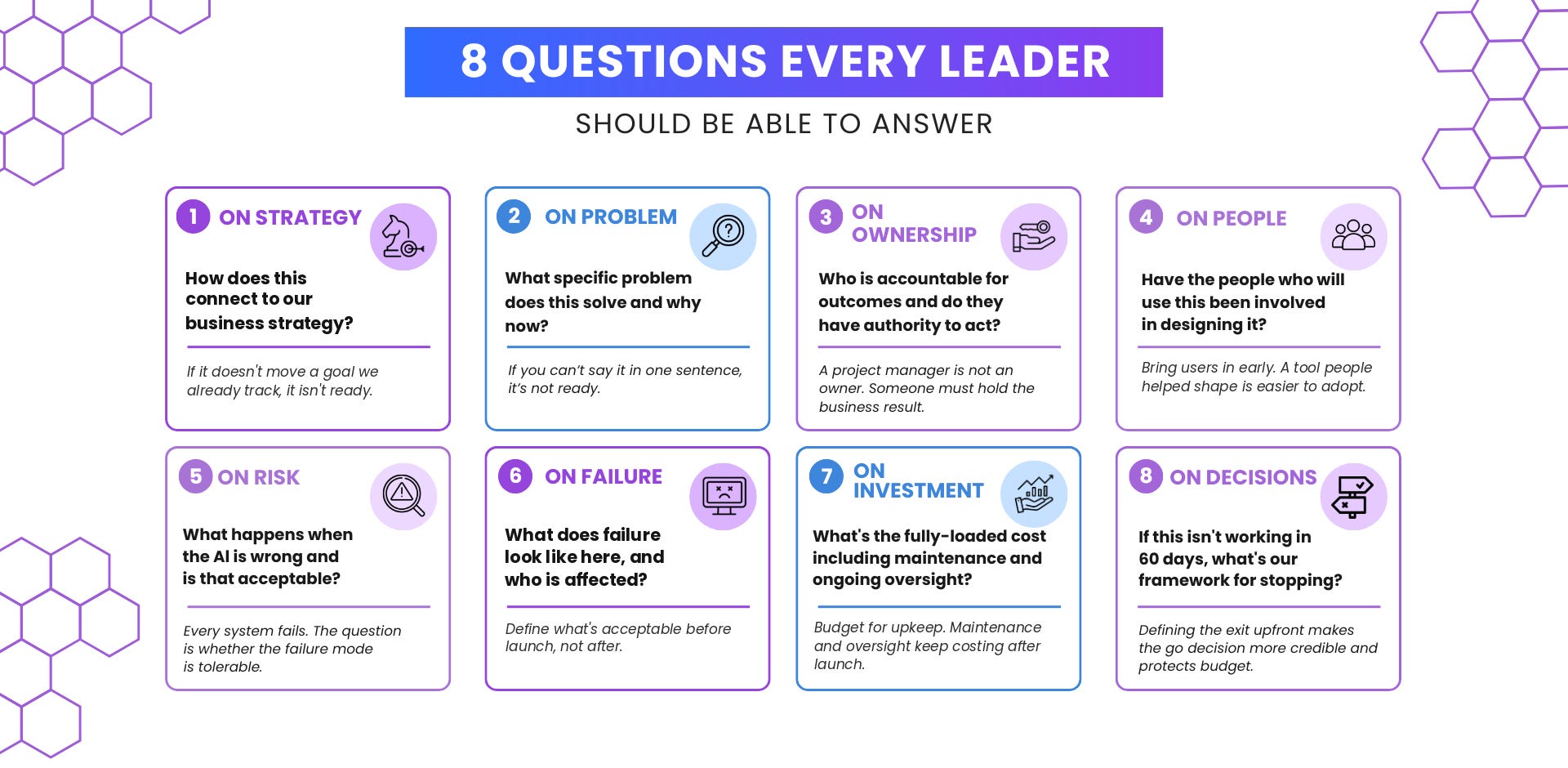
Which of the 8 questions could you not answer today?
Hit reply and share it. That question is where your next AI conversation should start.
Want more guides like this, free?
Subscribe to The Incredible Edge and receive: The complete Claude guide & 100+ startup opportunities straight to your inbox.
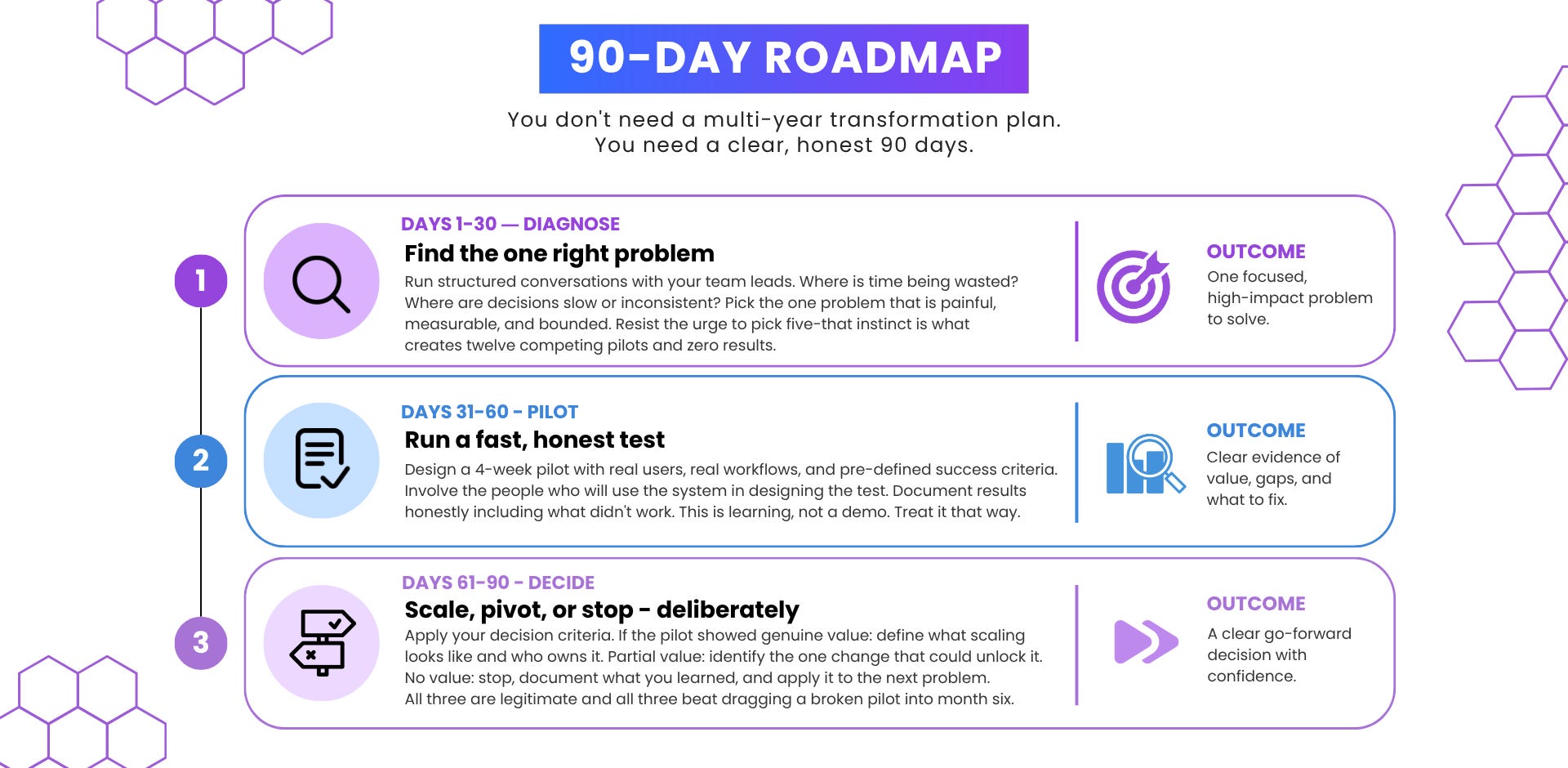
A 90-day roadmap that actually works
You don’t need a multi-year transformation plan.
You need a clear, honest 90 days.
This is the structure I’ve seen work most consistently.
I spent too long in that first meeting... and many after it... assuming that not understanding the technology meant I had nothing to contribute.
It took me a while to realize that the room didn’t need another technical opinion.
It needed someone asking: who does this serve, how will we know if it’s working, and what happens to the people whose jobs this changes?
Those were always my questions to ask. They’re yours too. Don’t wait to be invited to ask them.
Worth reading