

What Exactly is an AI Agent?
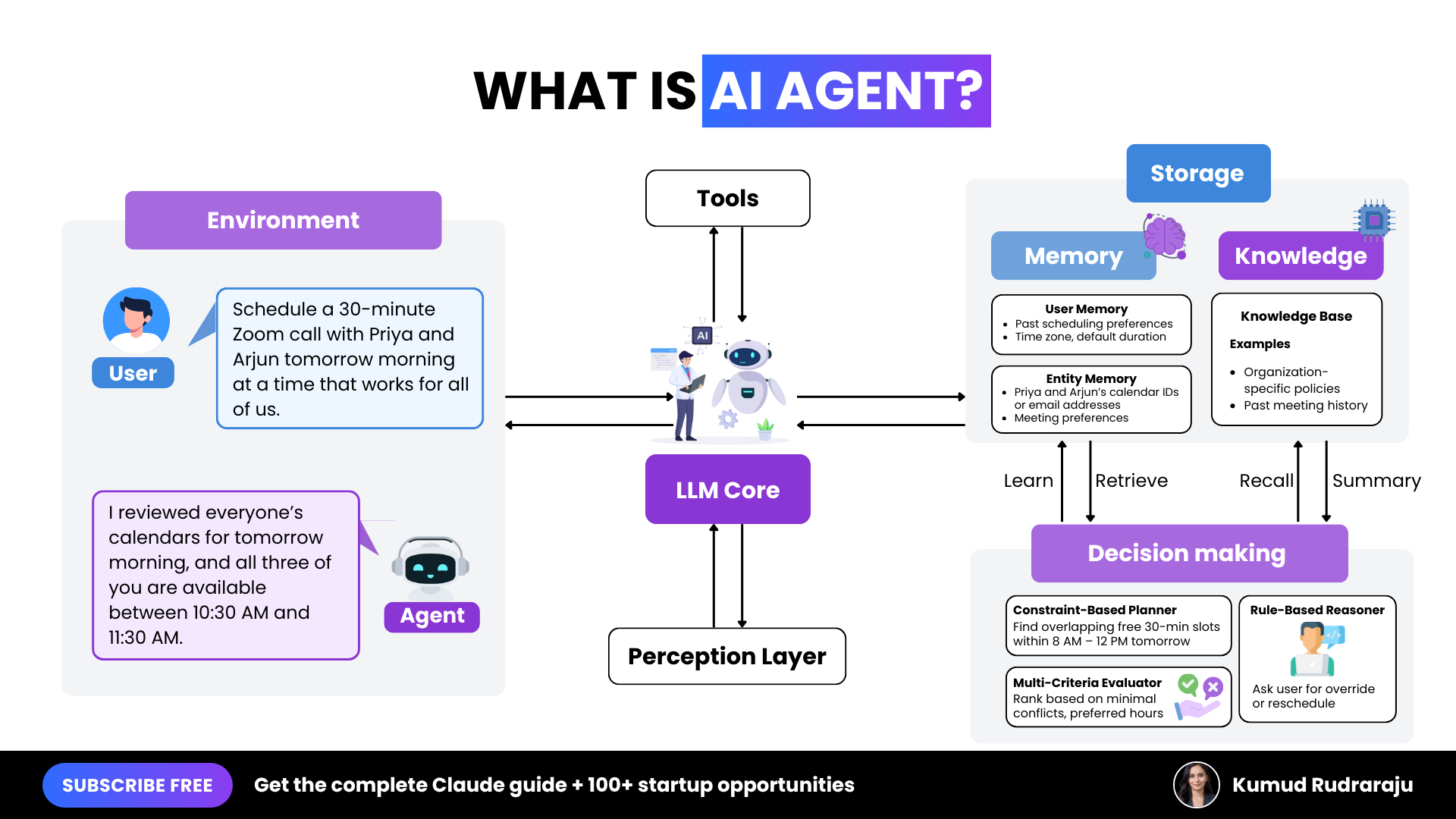
AI agents are more than just tools they’re systems designed to think and act on their own, based on the data they receive and the environment around them. They’re the intelligent assistants that could one day replace routine human tasks, or simply make our jobs easier.
What do they do?
Chatbots answering customer questions 24/7.
Autonomous robots completing warehouse tasks.
Virtual assistants scheduling our meetings and managing tasks.
Real-World Applications
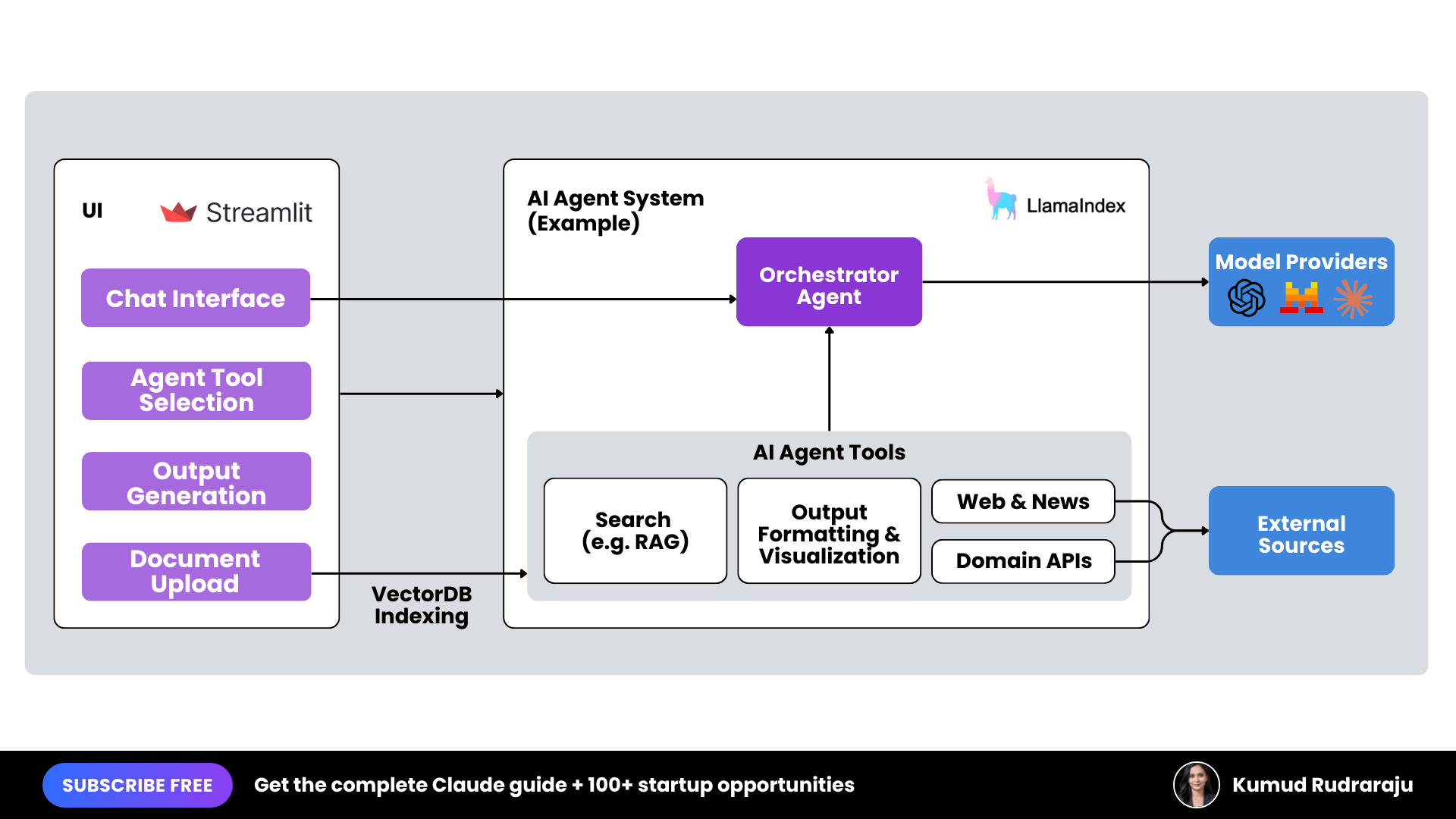
Customer Support: Chatbots and virtual assistants improve response times and cut down on manual work.
Finance: AI agents analyze trends and make real-time stock trades based on data.
Healthcare: Diagnostic assistants help doctors make quick, accurate decisions.
Robotics: Self-learning robots take over repetitive manufacturing tasks.
The Core Components of an AI Agent
How do AI agents actually work? There are three main components that make them tick:
1. Perception: The agent’s ability to sense its environment like how a self-driving car perceives obstacles using cameras or a robot analyzes its surroundings using sensors.
2. Decision-Making: Once an agent perceives something, it needs to make a choice. This is where machine learning or rule-based algorithms come into play. For instance, reinforcement learning can help an agent decide the best course of action based on rewards and penalties.
3. Action: This is the fun part where the agent actually does something. Whether it’s sending a response in a chatbot, recommending a movie, or controlling a robotic arm, this is the output of its decision-making process.
The Tools You Need to Build Your Own AI Agent
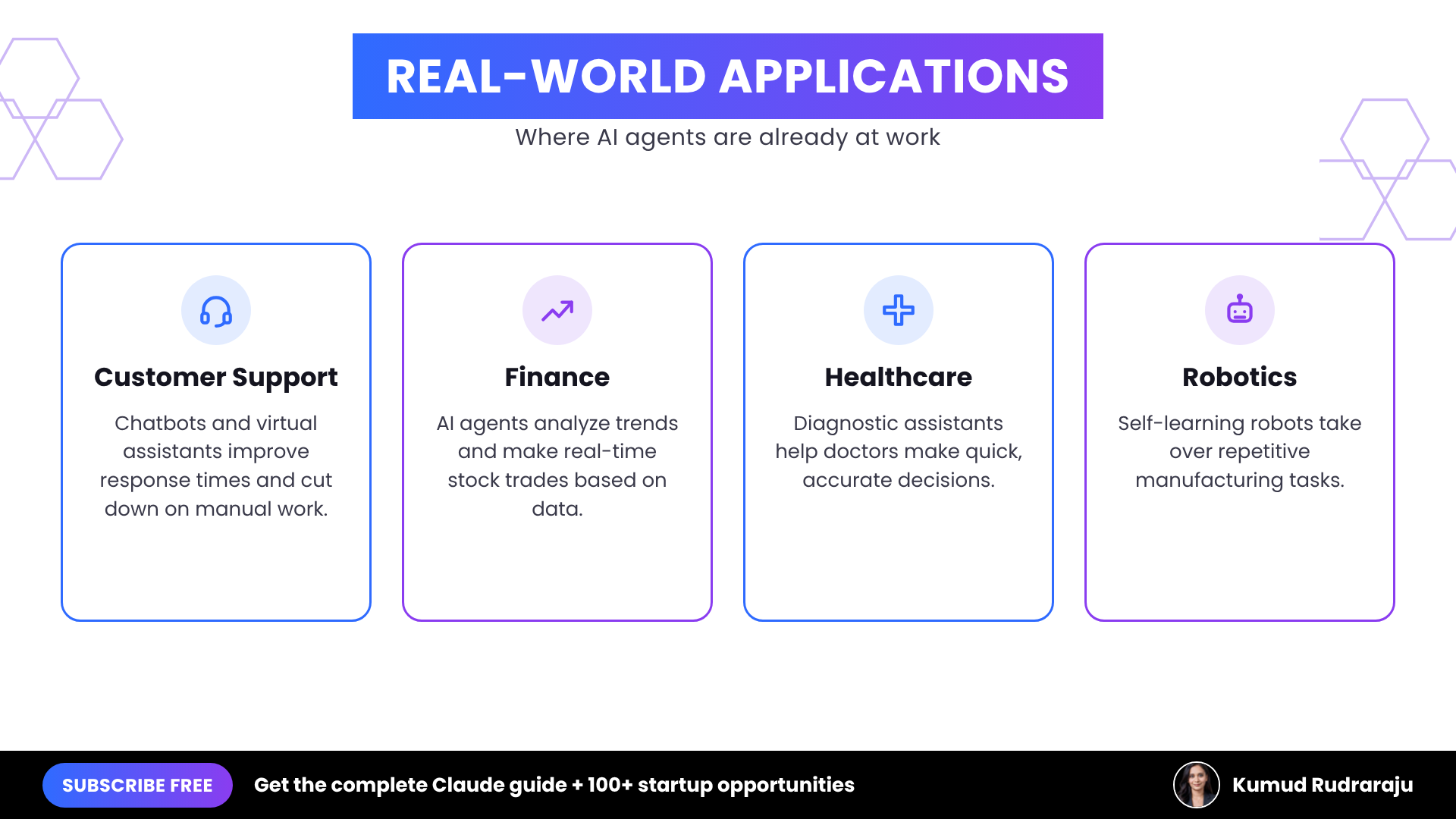
Building AI agents requires the right set of tools. Here’s a quick rundown:
Python: The most popular language for AI development due to its versatility and huge ecosystem.
Libraries:
OpenAI Gym: Perfect for training reinforcement learning agents.
Langchain: Build powerful language models with ease.
Rasa: For developing intelligent chatbots.
TensorFlow/PyTorch: Leading libraries for deep learning.
Flask/Django: Deploy your AI agents as APIs for wider use.
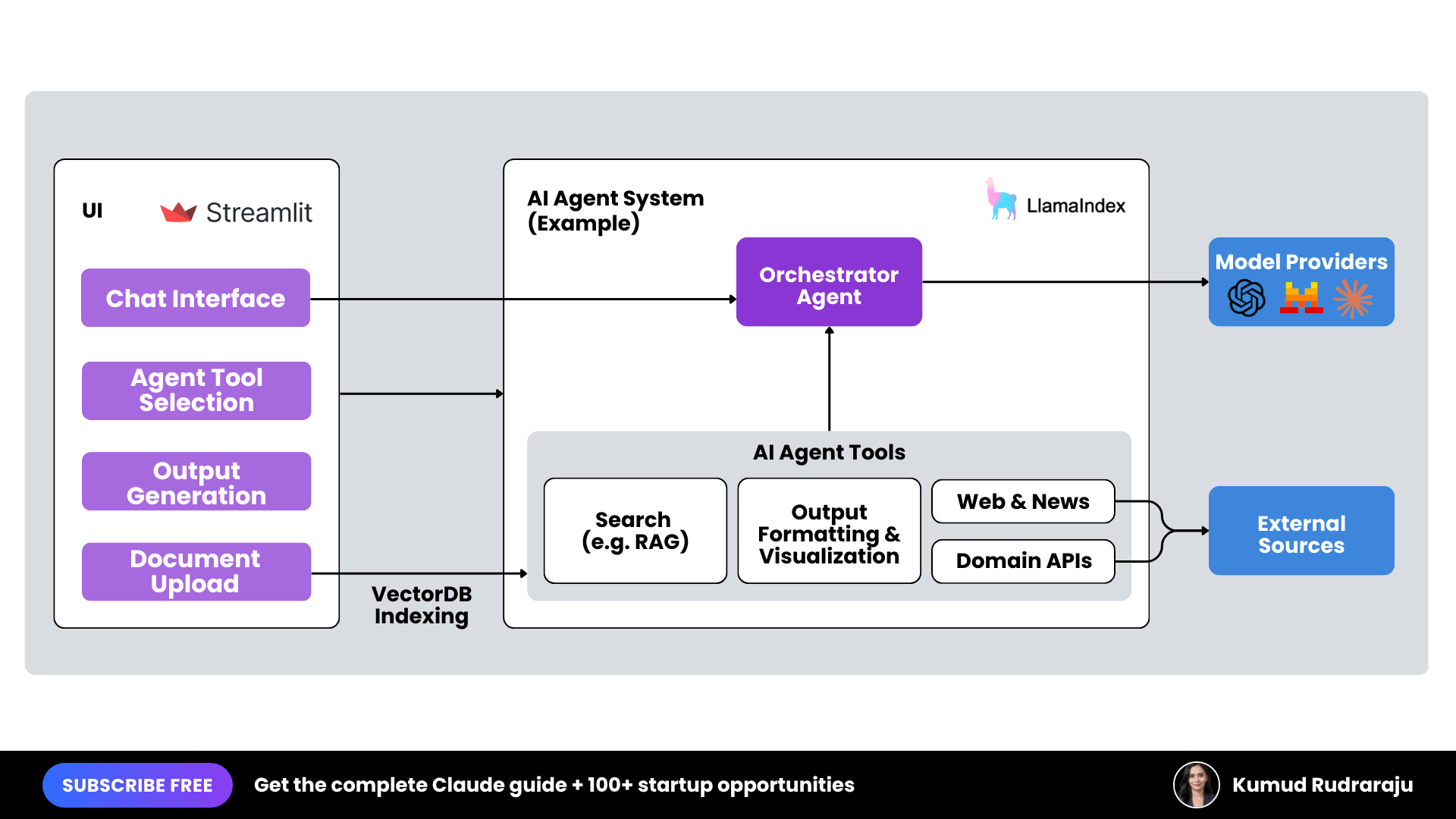
A Simple Guide to Building Your First AI Agent
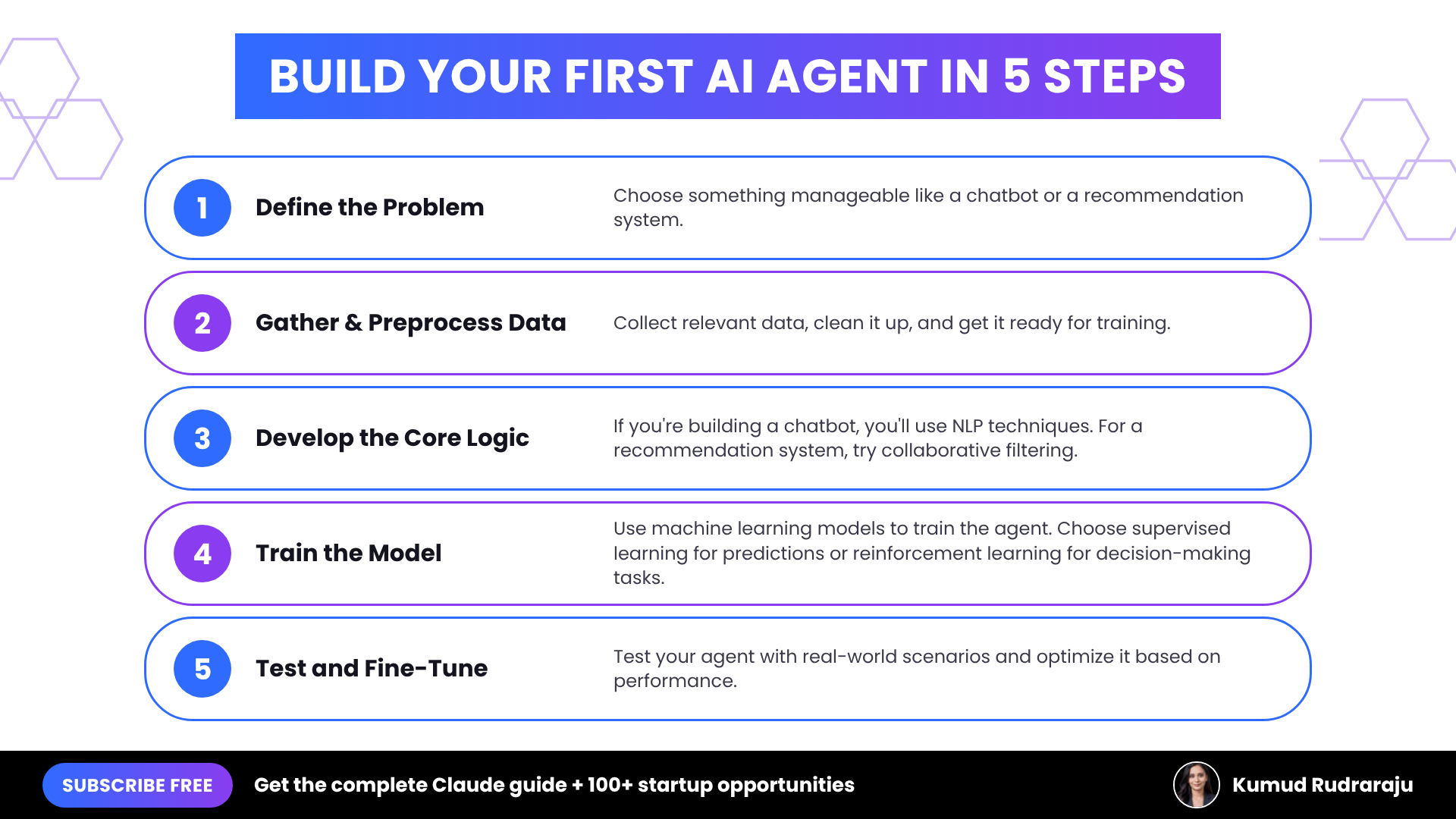
How to Deploy Your AI Agent?
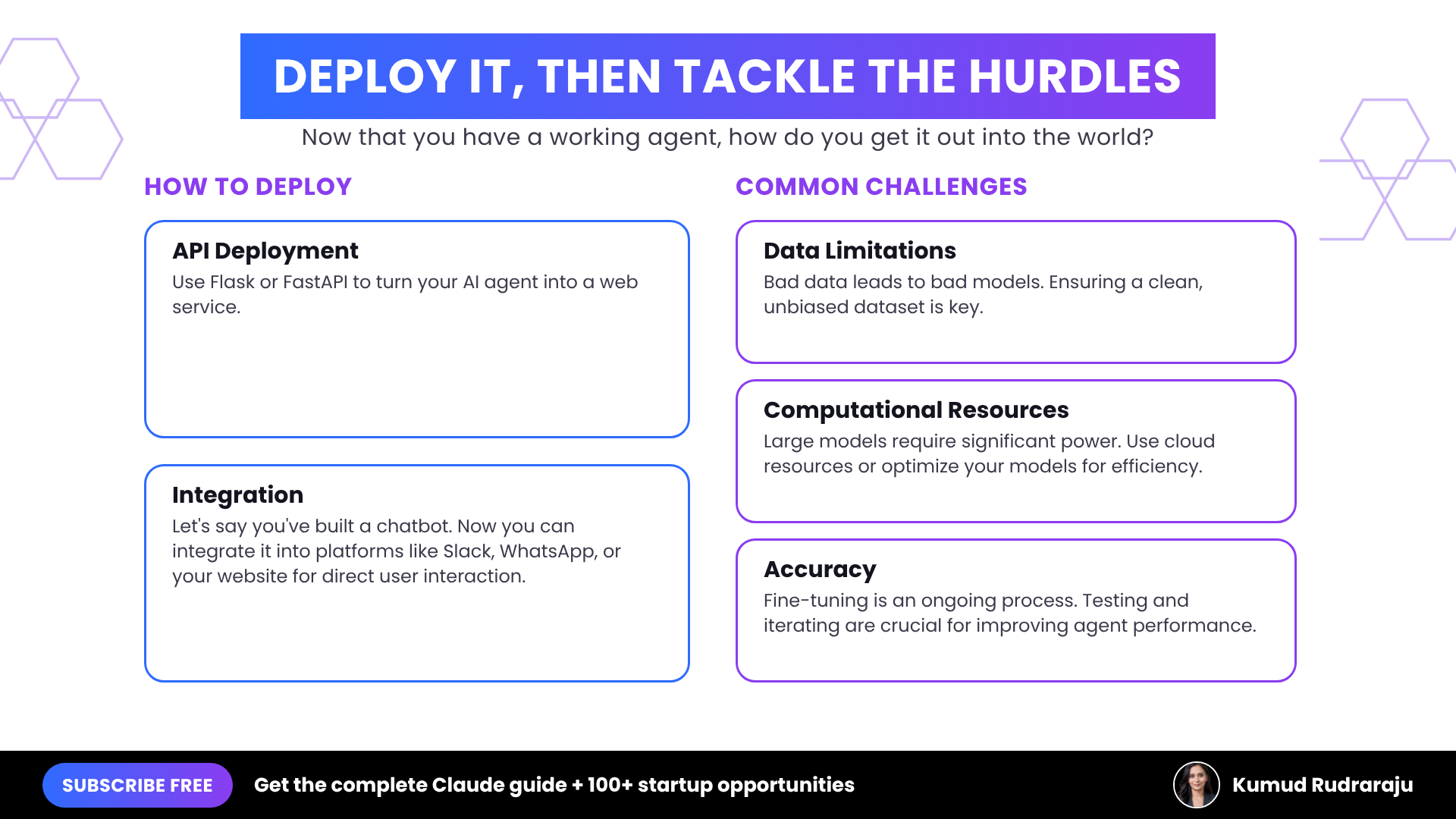
Now that you have a working agent, how do you get it out into the world?
API Deployment: Use Flask or FastAPI to turn your AI agent into a web service.
Integration: Let’s say you’ve built a chatbot now you can integrate it into platforms like Slack, WhatsApp, or your website for direct user interaction.
Common Challenges (And How to Tackle Them)
Every AI engineer faces hurdles while building agents. Some common challenges include:
Data Limitations: Bad data leads to bad models. Ensuring a clean, unbiased dataset is key.
Computational Resources: Large models require significant power. Use cloud resources or optimize your models for efficiency.
Accuracy: Fine-tuning is an ongoing process. Testing and iterating are crucial for improving agent performance.
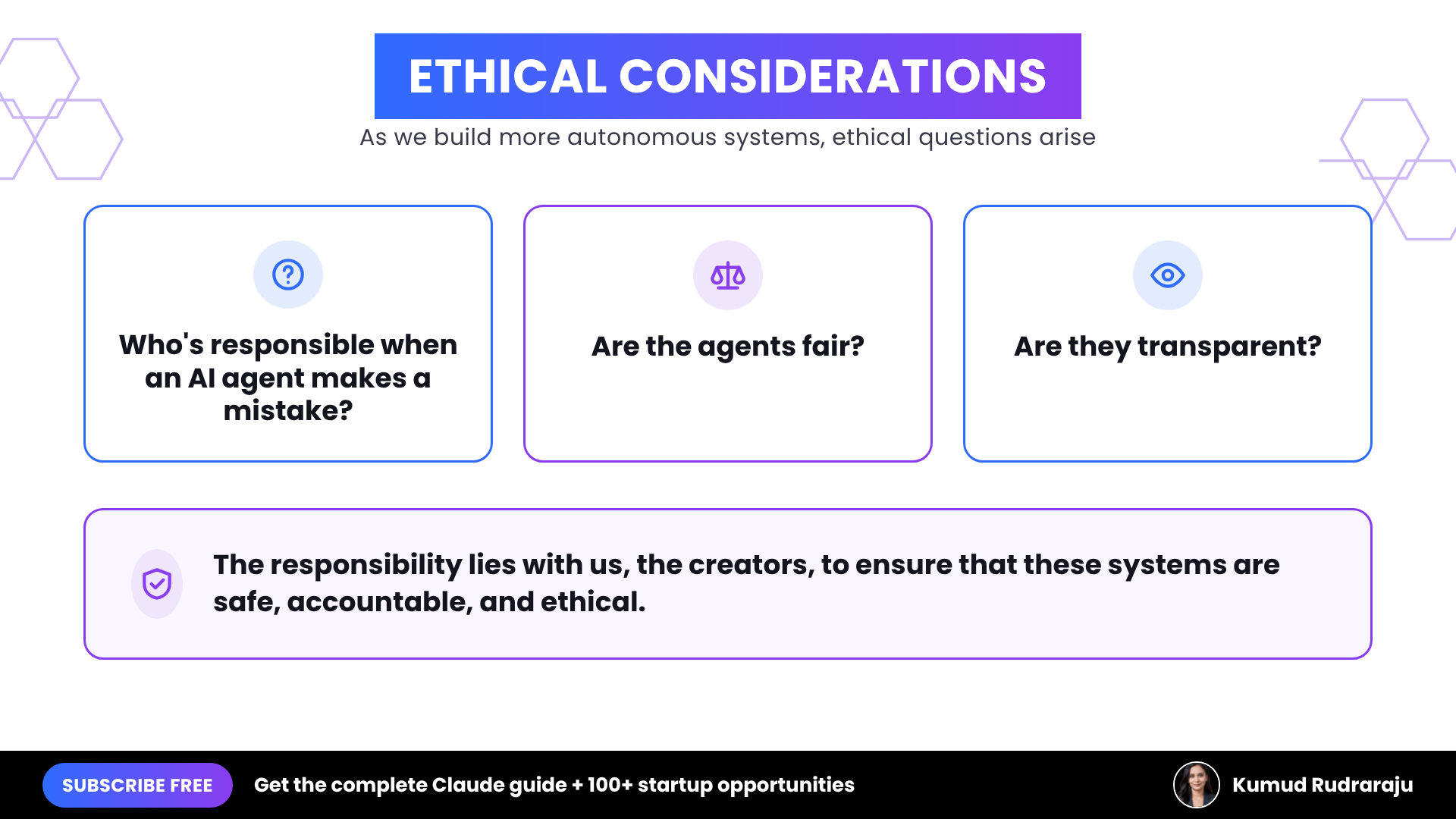
Ethical Considerations: The Responsibility of AI Agents
As we build more autonomous systems, ethical questions arise. Who’s responsible when an AI agent makes a mistake? Are the agents fair? Transparent?
These are questions we must ask ourselves as we build these systems. The responsibility lies with us, the creators, to ensure that these systems are safe, accountable, and ethical.
What’s Next?
Building AI agents is just the beginning. There’s a vast world of possibilities ahead advanced techniques like multi-agent systems, reinforcement learning, and AI ethics await your exploration.
So, get started with your first agent, experiment, break things, and learn from them. The future of intelligent systems is waiting for you to shape it.
Let’s continue pushing the boundaries of AI. What will your first AI agent do?
Want more guides like this, free?
Subscribe to The Incredible Edge and get these straight to your inbox:
The complete Claude guide
100+ startup opportunities
Practical AI guides for leaders and job seekers